
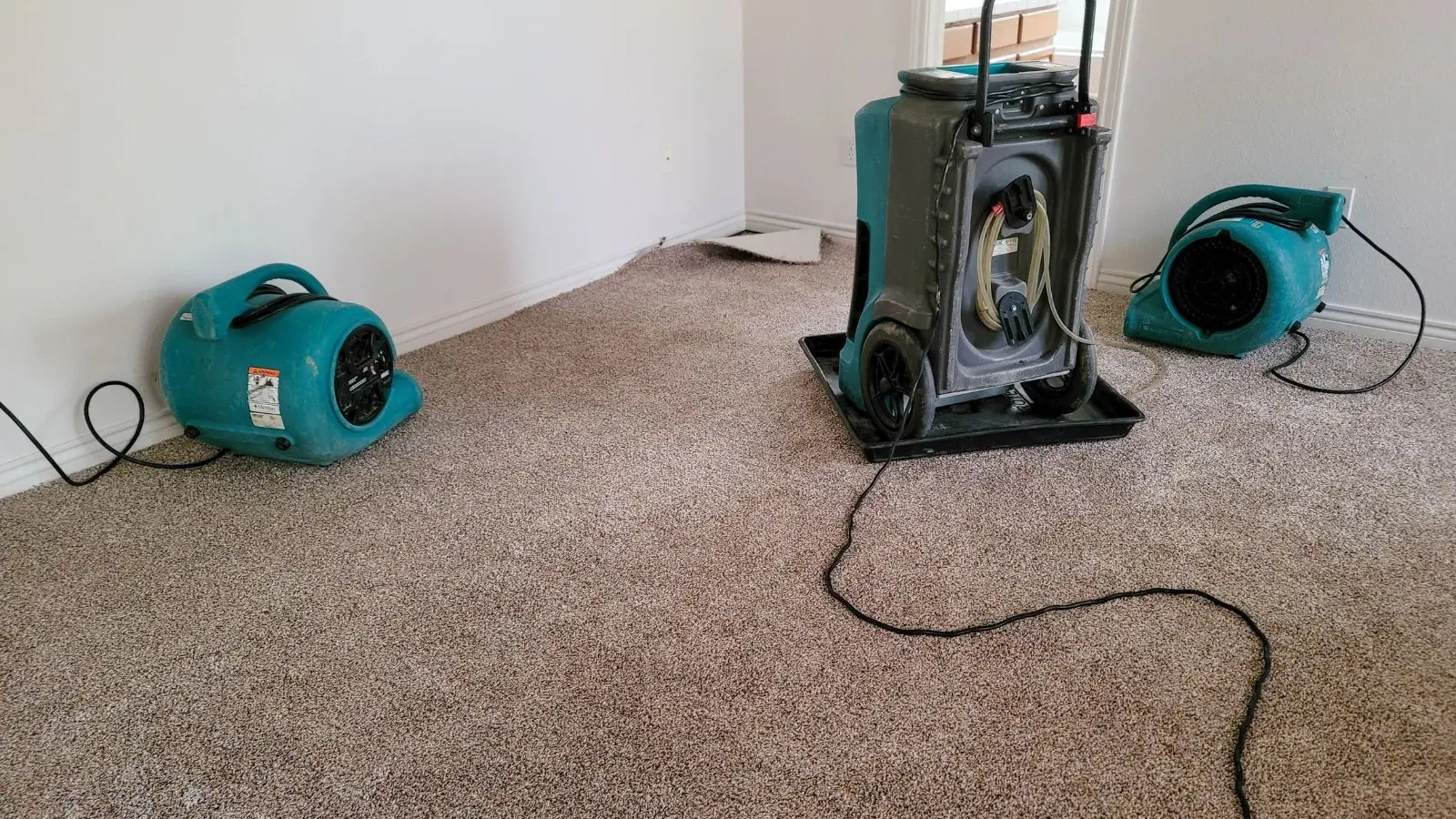
The first 24 to 72 hours decide how large a water loss becomes, so mitigation is an emergency service. The emergency line is open 24/7. While you wait for a crew, stop the source if you can do it safely, lift valuables, keep the area ventilated and photograph what you see before anything is moved.
Mitigation is the damage-control stage. It is different from the cleanup that follows and the rebuild after that, and the cleanup page covers the next stage in detail.
My walls feel damp and the floor feels soft. What do I do?
A damp wall, a floor that gives under your foot, paint that bubbles and a musty smell are the signs most people notice before they know the trade name. They point to water that has moved beyond the visible stain and into materials. The professional answer is water mitigation, which finds the water, stops it and dries the building in a controlled way.
That answer is the short version. The rest of this page explains how the crew finds hidden moisture, what equipment is used and how long the work usually takes.
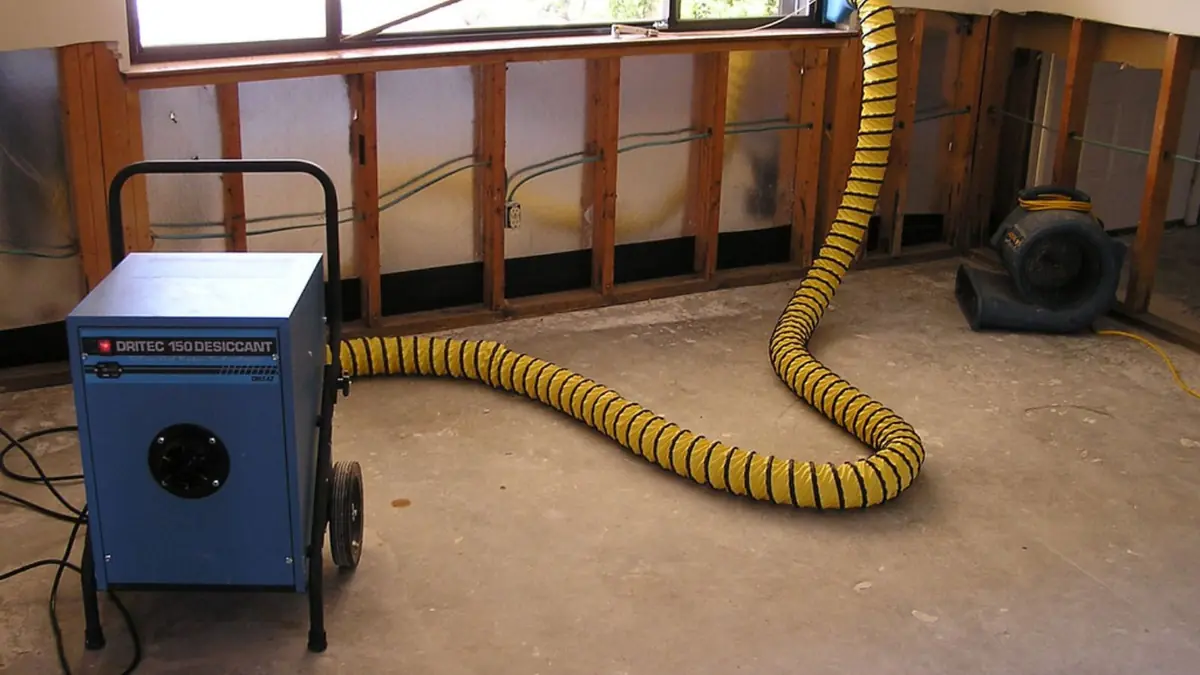
The first 24 to 72 hours are an emergency window
Stop the source
Close the valve, patch the leak or tarp the roof opening so no more water comes in.
Map the moisture
Moisture meters and thermal imaging show where water traveled, including inside walls.
Remove what cannot dry
Wet padding, soaked insulation and swollen drywall come out so the rest can dry.
Dry with equipment
Air movers and dehumidifiers run while daily readings track progress.
Structural drying: how a wet building is dried
Structural drying uses air movement and dehumidification together. Air movers push dry air across wet surfaces, and low-grain refrigerant dehumidifiers pull moisture out of the air so it can keep absorbing more. Open wall cavities, floor drying systems and containment barriers help when water sits behind finished surfaces.
Each day the crew takes readings from the same spots and compares them with a dry reference. When the readings reach dry standards the equipment goes. Many ordinary losses take roughly three to five days, and heavy soaking can take longer. A drying log is a good record to ask for, and it helps with an insurance claim.
San Pedro adds one wrinkle. Mean daily highs run from the high 60s in winter to the low 80s in August, so the weather is mild and humid air near the coast does not do much of the drying for you. Dehumidifiers earn their place here, because opening windows rarely lowers the humidity inside a damp house.
| Drying tool | What it does | When it is used |
|---|---|---|
| Moisture meter | Reads moisture in drywall, wood and subfloor | At assessment and every day after. |
| Thermal camera | Shows cool, wet areas behind surfaces | To find hidden water paths. |
| Air mover | Moves air across wet surfaces to speed evaporation | On floors, walls and in cavities. |
| LGR dehumidifier | Removes moisture from the air | Throughout the drying period. |
Why speed matters for mold and materials
Mold needs moisture, and wet drywall, carpet and framing that stay damp for more than a day or two give it a place to start. Wood swells, paint peels, and hardwood cups. Fast mitigation keeps more of the original materials and shrinks the repair that follows.
If water has already been sitting, the mold remediation page explains how the clean-up changes once growth has started.
What shapes the price of mitigation
| Factor | What changes | Why it matters |
|---|---|---|
| Water category | Clean, gray or contaminated | Contaminated water adds removal steps. |
| Affected area | Rooms and wall height reached | More area needs more equipment. |
| Materials involved | Hardwood, plaster, concrete, drywall | Dense materials dry slowly. |
| Drying days | Based on daily readings | Equipment time is part of the scope. |
| Rebuild scope | Drywall, flooring, finishes | Priced separately after drying. |
Mitigation costs are often part of an insurance claim when the damage was sudden and accidental. Slow leaks and neglect are often excluded, and flood usually needs separate coverage. Check your policy, ask your insurer, and request moisture logs and photos as they are produced. No outcome can be promised.
Want your real number? Call and explain what is wet. Scope and price are explained before work starts.
☎ Call (424) 550-5662Where the work happens
Homes on the Palos Verdes side of the bluffs in Rancho Palos Verdes and condos near downtown San Pedro both get the same assessment, and for larger buildings the plan is written out so equipment counts are clear. After drying, many homes go straight into water damage repair.
Questions about water mitigation
Do you handle water mitigation emergencies at night or on weekends in San Pedro?
Yes. The emergency line is answered 24/7. After-hours and weekend calls are routine for mitigation, and same-day response is offered when available.
How do I know water is inside my wall?
Look for a cool or damp wall, a soft baseboard, bubbling paint and a musty smell. A moisture meter or thermal camera confirms it, so ask for a reading rather than relying on touch.
How long will the drying equipment run?
Often around three to five days for an ordinary loss, but it depends on daily readings. The equipment stays until the structure reaches dry standards.
Can I rent air movers and dehumidifiers myself?
Equipment alone does not tell you where the water went. Mitigation pairs equipment with moisture mapping and daily readings, and that is the service described here.
Is mitigation the same as repair?
No. Mitigation stops and dries the damage. Repair rebuilds drywall, flooring and finishes afterwards.