
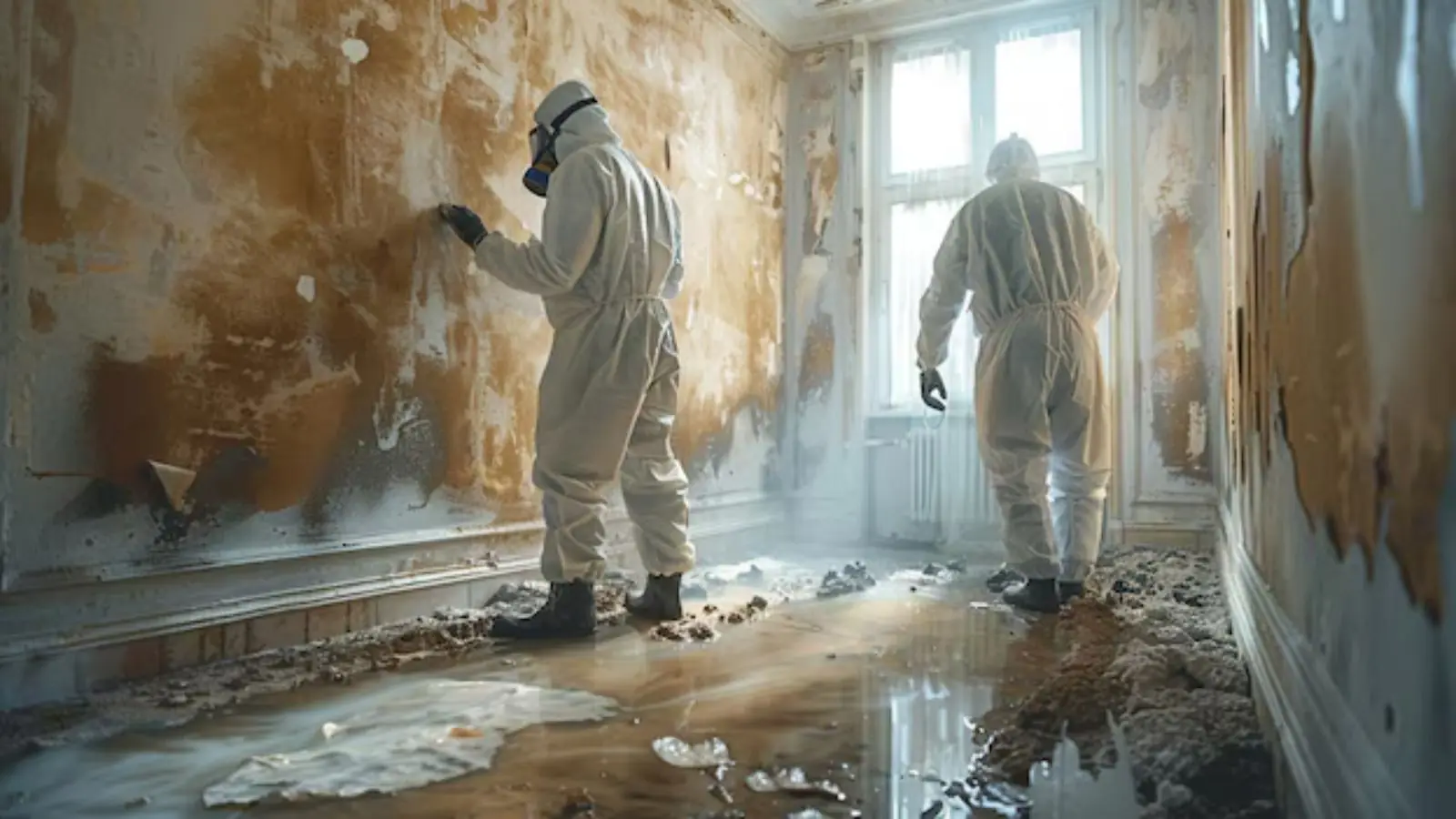
Mold is not an emergency in the same way flowing water is, but it does get worse with time, so call as soon as you see it. The line is open 24/7 and an assessment can be scheduled. Until then, do not disturb the area, keep the HVAC from blowing across it, and stop any leak that is still running.
Most mold follows a leak, and the water mitigation page covers stopping the moisture that mold depends on.
I see spots on the ceiling and a musty smell. Is that mold?
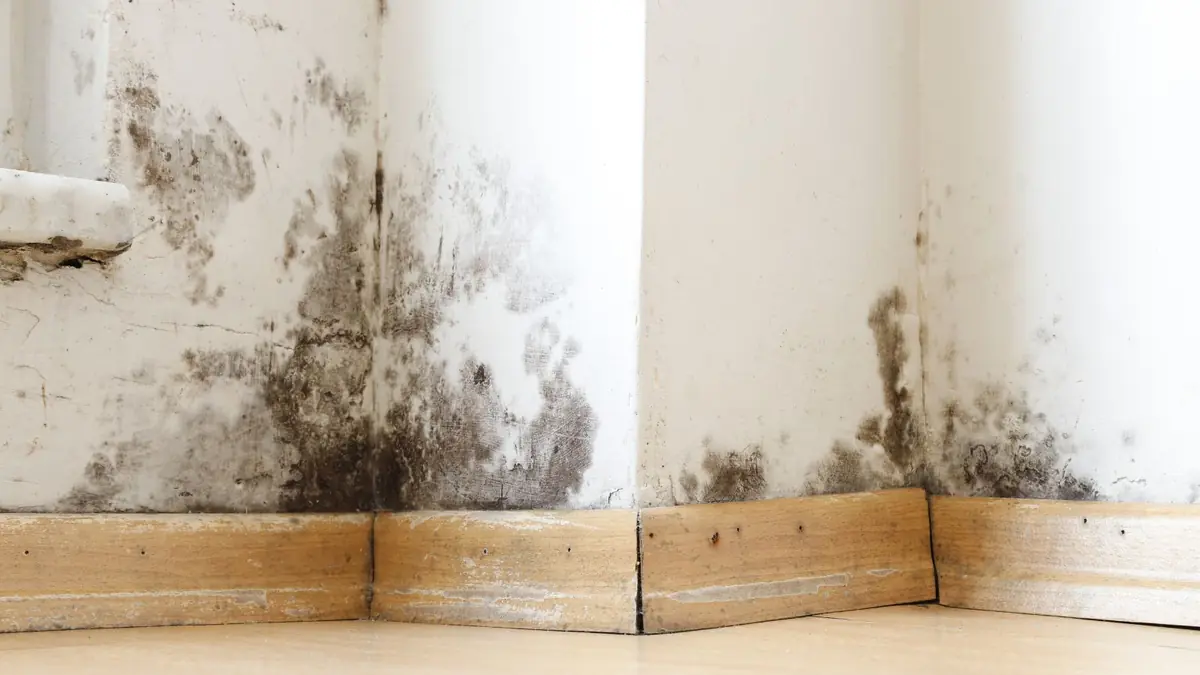
Dark spots near the corner of a wall and ceiling, a damp closet, fuzzy patches under a sink and a smell that returns after you wipe the area are the usual signs. They often show up after a leak from a toilet, a sink, an air conditioner condensate line or a roof. Only testing or a trained eye can say for sure what it is, and the answer drives the plan.
The trade answer is an assessment followed by mold remediation if growth is confirmed. The rest of this page explains how both work.
Mold testing and inspection
An assessment starts with finding the moisture. A moisture meter and thermal camera trace where water traveled, because mold only grows where there is a constant source. Sampling, when used, is done to identify the type and extent, and an independent tester can provide clearance results after work is done.
An independent clearance test is useful when a lender, landlord or buyer asks for it. Whether a lender accepts a particular report is the lender's decision, so ask for their requirements first. Questions about how mold affects health belong with a physician.
| Step | What happens | Why |
|---|---|---|
| Assessment | Locate moisture and visible growth | The plan depends on size and cause. |
| Containment | Seal the work area with barriers and use negative air | Keeps spores from spreading. |
| Removal | Remove or clean affected materials | Growth in porous materials usually means replacement. |
| Cleaning | HEPA vacuum and wipe surfaces | Removes residual spores. |
| Verification | Visual check and, if wanted, independent clearance testing | Confirms the work met the plan. |
Mold removal and black mold cleanup
Mold color does not tell you how risky it is. Black mold is a popular label, but the plan is the same regardless of color: contain, remove, clean and fix the moisture. Surface mold on a hard material may be cleaned, while mold that has grown into drywall, insulation or carpet padding normally means that material is removed and replaced.
Painting over mold or spraying it with a household product does not solve the problem. Without drying the structure and fixing the leak, it returns. Anyone who promises that mold will never return is overselling, so be careful.
Mold after water damage
Most mold in homes follows a water event. A bathroom ceiling that stayed damp, a closet wall near a leaking line or a basement that flooded in a storm all give mold what it needs. Fixing the leak and drying fast are the best prevention, which is why mitigation and mold work are closely tied.
If your water damage is recent, call early so drying can start before growth appears. If your damage is old and you are seeing spots, the sequence is leak repair, moisture reading, containment and removal. The cleanup page explains how wet debris is removed first.
Mold and real estate
Mold comes up in home sales and rentals. A buyer's lender may require a clearance report before funding, and tenants may ask a landlord for remediation after a leak. A written scope, photos and independent clearance results make the record clear for everyone. Whether a lender accepts a report is their decision, so ask them what they need.
Ask whether your state licenses mold work and what a contractor must show. Rules differ by state, so check with the agency that regulates contractors.
What shapes the price of mold remediation
| Factor | What changes | Why it matters |
|---|---|---|
| Size of growth | Square footage affected | Larger areas need larger containment. |
| Materials | Drywall, wood, insulation, carpet | Porous materials are replaced rather than cleaned. |
| Moisture source | Leak type and fix | The source must be repaired first. |
| Containment | Barriers, negative air | Higher containment means more equipment. |
| Testing and rebuild | Clearance and repair | Separate scopes and prices. |
Insurance coverage for mold depends on your policy and the cause. Mold that follows sudden and accidental water damage may be addressed, while mold from long neglect often is not. Ask your insurer and keep photos, scopes and test reports.
Mold work also covers homes in Lomita, where more than half of occupied homes are rented and landlords and tenants often share the paperwork after a leak.
Want your real number? Call and describe where you see mold and where the leak was. Scope and price are explained before work starts.
☎ Call (424) 550-5662Questions about mold remediation
Do I need testing before remediation?
Not always. Visible growth with a known water source may go straight to a plan. Testing helps when the source is unclear, when a lender or tenant asks for it, or when you want independent clearance afterwards.
Can I just clean mold with bleach?
On a small hard surface, a cleaner may remove the stain, but it does not fix the moisture and does not work on porous materials. Large or hidden growth needs containment and removal.
Will the mold come back?
If the moisture is fixed and the structure dried, recurrence is much less likely, but nobody can promise it. If water returns, growth can too.
Does my lender accept a clearance report?
That is up to the lender. Ask them what they require before you order testing, so the report matches their request.
Does mold remediation need a license in California?
Ask whether your state licenses mold work. Rules differ and change, so check the state agency that regulates contractors before you hire.