
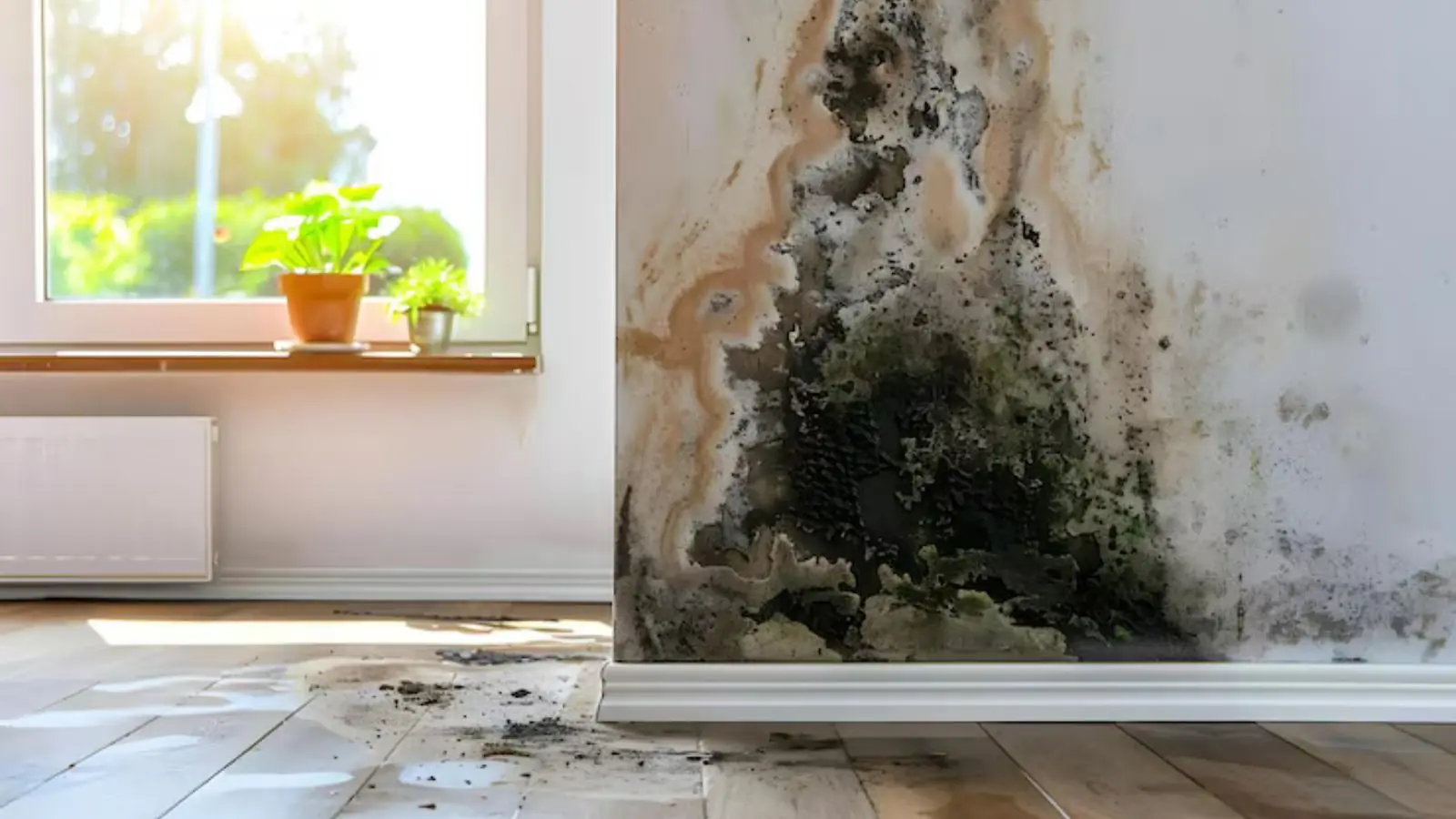
Mold announces itself in small ways. A smell you only notice when you come home, a stain in a corner, paint that bubbles or a bathroom that never quite dries are all clues. None proves mold, but each points to moisture, and moisture is what mold needs.
This guide helps you check your home, understand what a test kit can and cannot tell you and decide when a professional assessment makes sense.
Signs worth taking seriously
- A musty or earthy smell that returns after you air out a room.
- Visible patches in black, green, white or gray on walls, ceilings, grout or around windows.
- Peeling or bubbling paint, warped trim or soft drywall.
- Condensation on windows, especially when it never dries.
- A leak, flood or plumbing repair in the past few weeks, even if the surface looks dry.
Where to look first
| Place | What to check | Why mold shows up there |
|---|---|---|
| Under sinks and behind toilets | Dark staining, soft cabinet bottoms | Slow supply or drain leaks. |
| Closets on exterior walls | Musty smell, spots behind stored items | Little airflow and cold wall surfaces. |
| Bathroom ceilings and corners | Dark spots, peeling paint | Steam with weak ventilation. |
| Around window frames | Wet sills, stained trim | Condensation or leaks. |
| Attics and top-floor ceilings | Stains, damp insulation | Roof leaks or poor ventilation. |
| Lower-level rooms and garages | Damp walls, musty carpet | Moisture from the ground or leaks. |
Test kits versus a moisture assessment
Home test kits can tell you whether spores are present in a sample, but spores are in nearly every home, so a positive result does not say whether you have a problem. A moisture assessment answers a more useful question: where is water, and how much material is wet. That drives the plan.
If a lender, landlord or buyer asks for a report, independent clearance testing by a third party can document the result. Ask what they require before you order a test. Health questions belong with a physician.
San Pedro note: check after the winter storms
San Pedro's rainfall comes mostly in January through March, with each month averaging roughly three inches, and the summer months are nearly dry. That makes late winter and early spring the time to check attics, upper ceilings and window frames for the stains and smells left by a wet season.
The peninsula's mild temperatures, with daily highs from the high 60s in winter to the low 80s in August, mean damp rooms rarely dry on their own. If a leak happened, ask for moisture readings rather than waiting for warm weather to do the work.
What to do first
Stop any leak, dry the area and photograph what you see. Do not disturb a large patch. If the signs are small and the surface is hard, clean as described on the cleanup page and monitor. If the smell persists, the area is soft or growth is larger than a patch, ask for an assessment and containment plan from a crew that works to the ANSI/IICRC S520 standard.
Homes in Wilmington and Torrance follow the same checklist. Once moisture is confirmed, the mold remediation page explains containment, removal and verification.
A quick room by room walk
Start at the bathroom and move through the kitchen, bedrooms, closets and garage. Use a flashlight along baseboards and window frames, and press gently on paint that bubbles. Soft drywall, warped trim and cold damp walls deserve a closer look.
Write down each room, what you saw and any smell. Take photos in the same light on later days so you can see if a spot is growing. A slow change is still a change, and it tells a crew where to look first when you call.
Signs that are not mold
Dust, soot from candles and old stains from a fixed leak can look like growth. A dry, firm surface with no smell and no new spread is usually not active. Wipe a small area with a damp cloth. Dirt lifts and mold tends to smear or return.
When to call
Call when a smell persists, a surface is soft, a spot keeps spreading or you know of a past leak you never fully dried. Describe the room, the smell and any water event. A good crew will ask the right questions before it sends anyone.
Calling early costs less than waiting. Mold spreads along wet material, and a small area found early is easier and cheaper to handle than a large one found by accident.
Smell or stains but no visible mold? Call and ask about a moisture check.
☎ Call (424) 550-5662Questions about spotting mold
Can I smell mold without seeing it?
Often yes. A persistent musty smell can come from damp material behind a wall or under a floor.
Are test kits worth buying?
They show spores are present, which is true in most homes. A moisture assessment tells you more.
How soon after a leak can mold start?
It can begin within a day or two if materials stay wet, which is why early drying matters.
Do San Pedro homes need more mold checks after storms?
Check attics, upper ceilings and window frames after heavy winter storms, since that is when roof and window leaks show up.
Does insurance cover mold?
Coverage depends on your policy and the cause. Ask your insurer and keep photos and reports.