
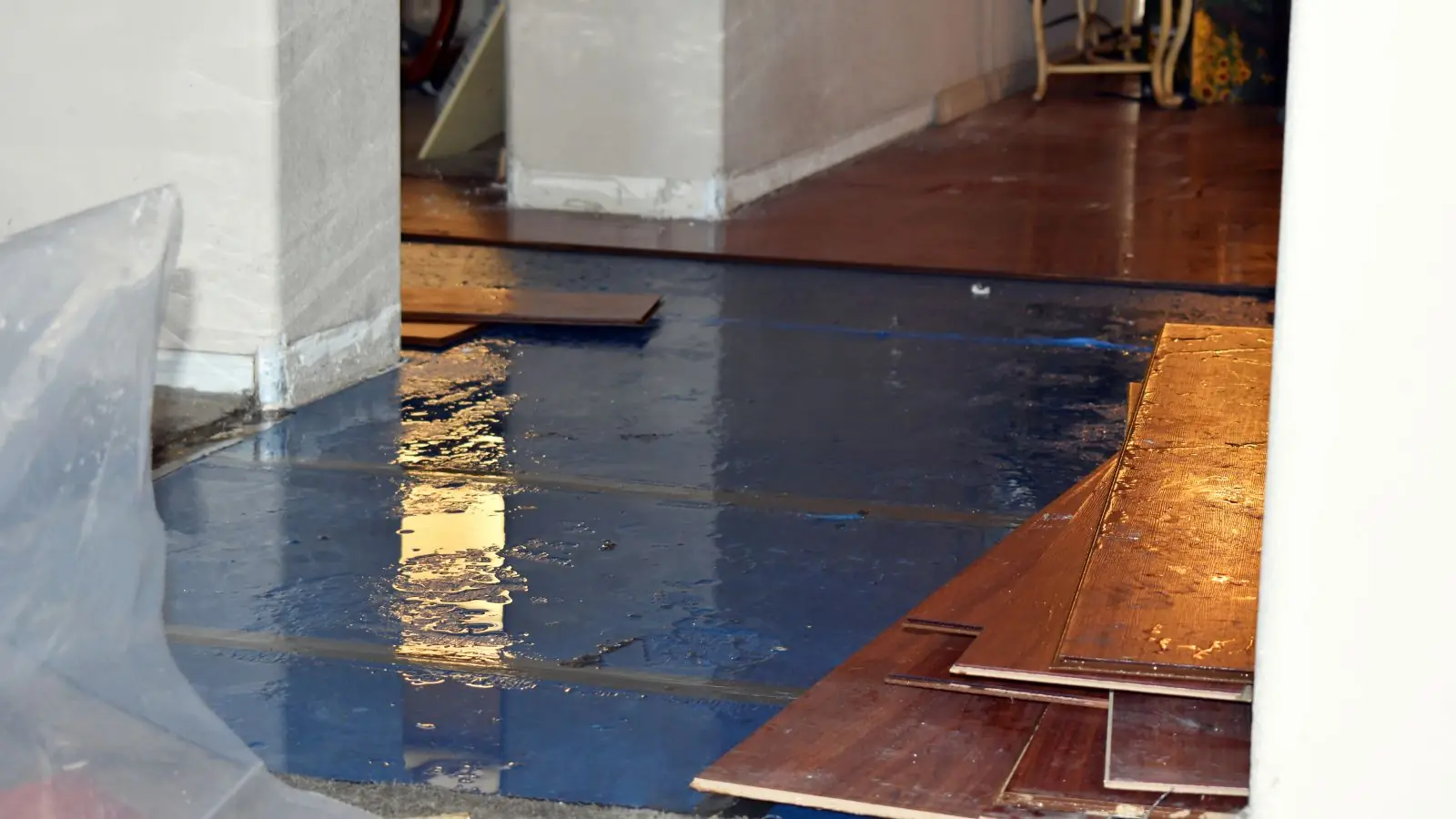
Wood is forgiving when it dries quickly and unforgiving when it does not. A floor that got wet for a few hours may recover with no sanding at all, while the same floor left damp for two weeks may need to come out. The first thing that decides the outcome is time, and the second is how the wood was finished and installed.
This guide covers solid and engineered flooring, baseboards and trim, subfloor and exterior wood such as decks. It assumes the source of the water is fixed. If water is still present, start with emergency water removal so the wood stops absorbing.
Step one: stop the water and check the moisture
Wood absorbs water through its edges and underside, so the visible surface is the last place to show trouble. A moisture meter gives a number for each board and for the subfloor beneath it. Compare the readings with a dry area of the same room, and track them for several days.
Standing water on a wood floor needs to be removed first. Then dry the room with air movers and a dehumidifier, which is covered in more detail on the water mitigation page. Do not use heat guns or space heaters to speed things up. Rapid heat on wet wood can crack boards and cause finish damage.
| Wood item | Early signs | Often salvageable? |
|---|---|---|
| Solid hardwood floor | Cupping, gaps, dark stains | Often, if dried within days and not soaked through |
| Engineered wood floor | Peeling top layer, edge swelling | Less often, because layers can separate |
| Baseboard and trim | Swelling, peeling paint | Often, if solid wood and dried quickly |
| Plywood subfloor | Soft spots, delamination | Replaced if soft or layers separate |
| Exterior deck boards | Dark patches, soft spots | Often dried and sealed unless rot has started |
Step two: wait for the wood to settle
Wood floors that cup after a leak often flatten gradually as they dry. Patience matters here. Sanding too soon removes material from boards that are still deformed, and the floor can end up with a crown after it finishes drying. Wait until moisture readings are stable and match the dry reference, which can take weeks.
If boards are cracked, split or permanently warped after drying, replace them. A skilled installer can weave new boards into an old floor, but a finish match takes extra effort, particularly on older floors that have yellowed with age.
Step three: sand, stain and finish
Once boards are flat and dry, a floor can be sanded and refinished. Stains from water may lighten with sanding, but black stains that go deep into the grain often come from tannin reaction or mold and need bleaching or board replacement. Test a small spot before you commit to a whole room.
Match the finish to the rest of the floor. A floor that is sanded in one room and not in the next can show a visible change at the doorway, so it is common to refinish a whole continuous area.
San Pedro note: the dry season is the repair season
San Pedro's rain falls mostly from January through March, and June through August are nearly dry. That makes summer the best time to dry out and seal exterior wood such as decks, fascia and window trim that took on water during winter storms. Interior floor work can happen any time, but the ground and air are driest in summer, which helps stubborn moisture leave the structure.
Repair projects in the city of Los Angeles that involve structural subfloor replacement may need a permit, so ask the Los Angeles Department of Building and Safety before cutting into framing.
When wood is not worth saving
Replace wood that is soft, crumbling, delaminated or moldy. Wood that stayed wet with contaminated water, such as sewage, should be replaced because it cannot be reliably cleaned. If you see fuzzy growth on the underside of a floor, treat it as a mold issue and read the mold remediation page before sanding anything, since sanding can spread spores.
Homes in Lomita and Rancho Palos Verdes often have wood floors over raised foundations, and the underside of those floors is where moisture hides. Ask for a reading from below, not just from above, and see the repair page for the rebuild.
Keep a record of moisture readings
Take a reading on the same spot each day until it stops falling. Wood that looks dry can still read high, so the numbers are the proof that refinishing is safe.
Wood floor cupping or trim swelling? Call and ask about moisture readings before you sand.
☎ Call (424) 550-5662Questions about water damaged wood
Will a cupped floor go back to normal?
Often it flattens as moisture leaves, but not always. Wait for stable readings before you decide, and expect that severe cupping may need sanding or replacement.
Can I dry a wood floor with a fan alone?
A fan moves air but does not remove moisture from the room. A dehumidifier plus air movers works much better, and readings tell you when to stop.
Is a dark stain on hardwood always mold?
No. Water can darken wood without mold, but dark stains with a musty smell deserve a closer look.
Should I repair outdoor wood in winter in San Pedro?
Emergency fixes yes. Full drying, sanding and sealing are best done in the dry months of summer.
Does wood damage need a permit?
Cosmetic repairs usually do not. Structural subfloor or framing replacement may, so ask the Department of Building and Safety.