
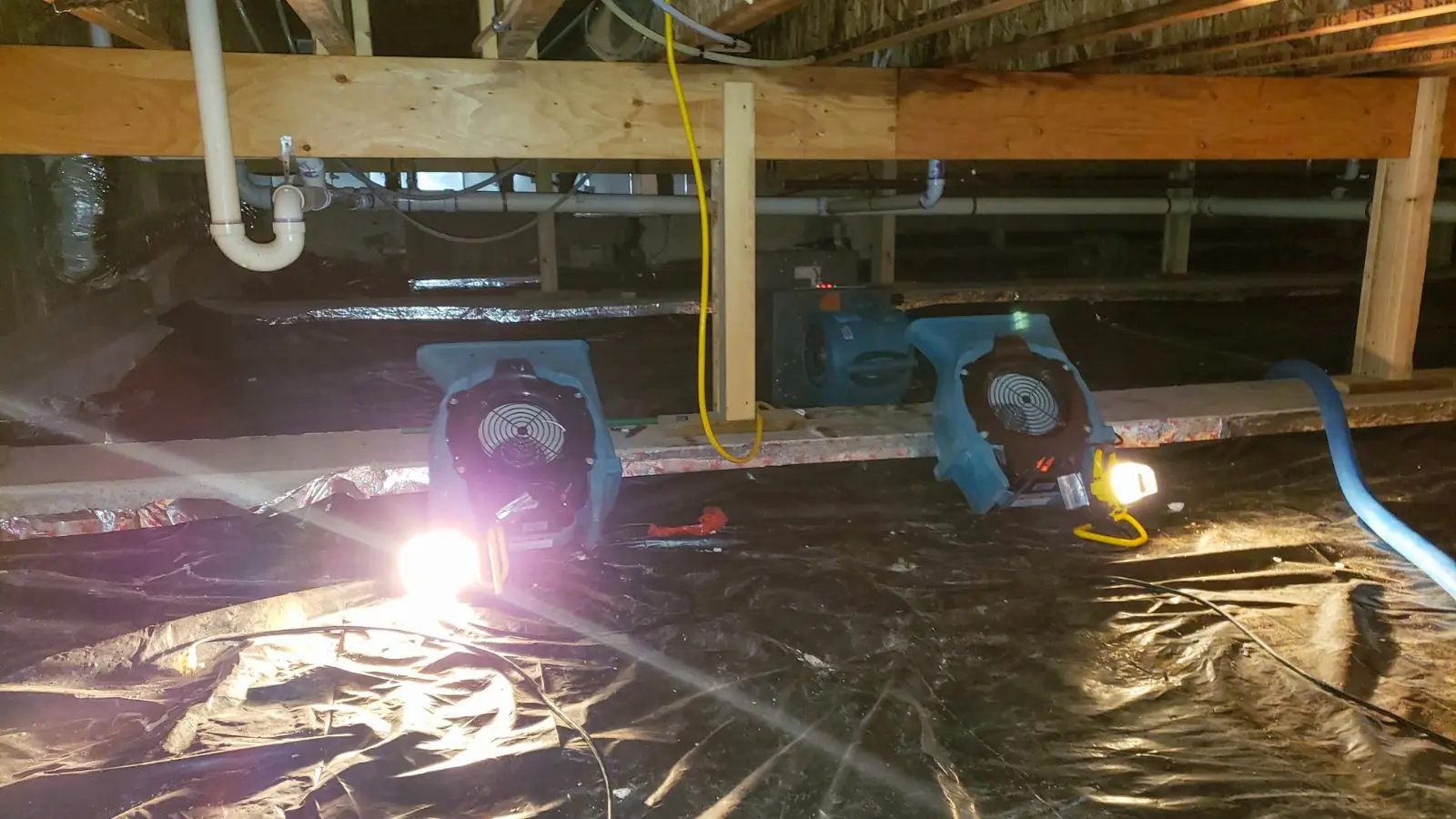
Eliminating mold from a basement is really a two-part job. The first part is removing what is already growing, and the second is making the room hostile to future growth. Most repeat mold calls come from skipping the second part. A cleaned wall in a room that stays at high humidity will grow again.
This plan assumes any active mold has been dealt with or is being handled by a crew. If you are still looking at visible growth over a large area, start with the mold remediation page, then come back to this plan for the long term.
Find where the moisture comes from
Lower levels get damp from several directions. Water can enter through the floor and walls, drip from plumbing, leak from a window well, condense on cold surfaces or soak in after a flood. Each has a different permanent fix, so the first job is a diagnosis.
A simple test helps with plumbing. Turn off all water use in the house, then watch the water meter. If it moves, a line is leaking somewhere. Tape a square of plastic to a wall or slab for a couple of days. Moisture on the room side means humid air condensing, and moisture under the plastic means water coming through.
| Moisture source | Permanent fix | Who usually does it |
|---|---|---|
| Plumbing leak | Repair the line and dry the area | Plumber, then a restoration crew |
| Gutters and grading that send water to the foundation | Extend downspouts, correct slope | Landscaper or contractor |
| Water entering through walls or slab | Drainage or waterproofing | Waterproofing contractor |
| Condensation from humid air | Dehumidifier, ventilation | Homeowner |
| Past flood or storm damage | Dry, clean and repair | Restoration crew |
Humidity targets and tools
Indoor humidity below about 60 percent, and ideally between 30 and 50 percent, makes mold much harder to start. A hygrometer, which is inexpensive, shows the number so you are not guessing. A dehumidifier sized for the room does the work, and one that drains to a floor drain or pump saves emptying a bucket.
Keep air moving, store belongings off the floor and away from exterior walls, and avoid wall-to-wall carpet in a room that has been damp. Cardboard boxes soak up moisture and feed mold, so plastic bins are safer.
What restoration does and does not do
A restoration crew dries the structure and repairs what the water damaged. It does not waterproof a foundation or fix the grading outside. When water keeps entering through the structure, a drainage or waterproofing contractor needs to fix the entry point, and we will tell you if that is the real problem. After a flood, the flood damage restoration page explains the sequence.
San Pedro note: test your fix before winter
San Pedro gets about 14 inches of rain a year, mostly from January through March. The dry months from June through August are the time to fix drainage, seal cracks and set up a dehumidifier, so you learn whether the fix holds when the first storms arrive.
If your water provider is the Los Angeles Department of Water and Power, ask how to read your meter for the leak test above. On the Palos Verdes side, the provider is usually the Palos Verdes system of California Water Service, and the bill names the company.
A simple monitoring routine
- Check the hygrometer weekly and log the reading.
- After every heavy rain, look at the lowest wall and the floor edge for damp spots.
- Run the dehumidifier whenever humidity passes your target.
- Look behind stored items and furniture a few times a year.
- Fix any leak the day you find it.
Owners in Wilmington and Lomita with lower-level garages or utility rooms can follow the same routine. If a leak or a flood does hit, early drying under water mitigation keeps a one-time problem from becoming a recurring one.
Storage and layout changes that help
- Keep stored items several inches off the floor on shelves.
- Leave a gap between furniture and exterior walls so air moves.
- Use a sump pump or floor drain only if one already exists and works.
- Avoid carpet, and use sealed flooring that can be cleaned.
- Keep the dryer vent and bath fans exhausting outdoors.
Small habits count. A room that gets a monthly check for odors, damp corners and stained boxes tends to stay ahead of problems. Write the readings in a notebook, because a trend is easier to read than a single number.
If humidity climbs even after these steps, ask for a moisture assessment to find hidden water.
Lower level still damp after cleaning? Call to ask about moisture readings.
☎ Call (424) 550-5662Questions about eliminating basement mold
Can I eliminate mold with a dehumidifier alone?
A dehumidifier controls moisture but does not remove existing growth. Use it with cleaning or removal.
Will sealing paint stop mold?
Not by itself. Sealers work on a dry surface after the moisture is controlled.
Is a musty smell enough to call a crew?
A persistent smell with no visible source is a good reason to ask for moisture readings.
When in San Pedro should I do basement work?
The dry months from June through August give you time to fix drainage and test the result before winter storms.
Does waterproofing guarantee no mold?
No. It reduces water entry, but humidity and plumbing leaks can still cause growth.