
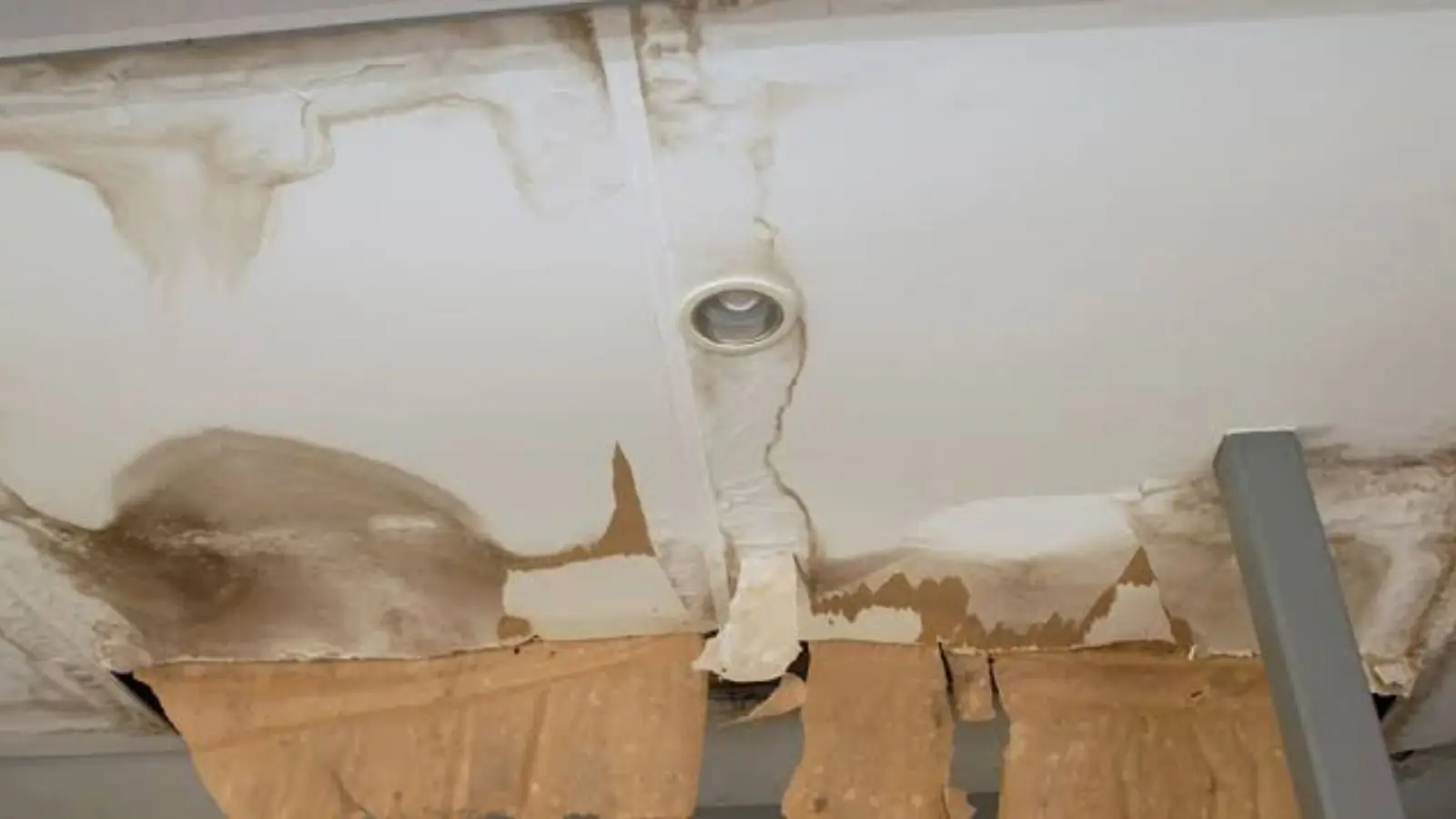
Ceiling mold nearly always points to moisture above or near it. A bathroom fan that does not vent outside, a roof leak, a condensate line or a cold corner that collects water can all do it. Cleaning the spot is the easy part. Fixing the moisture is what keeps it from returning.
This guide covers small spots on hard, painted ceilings. Larger areas, soft drywall or mold that returns after cleaning belong to professionals, and the mold remediation page explains that work.
Before you clean: fix the moisture
Find the cause first. If the bathroom fan is weak, repair or vent it properly. If a roof leak is the source, have the roof fixed. If a pipe is dripping above, repair it. Cleaning without fixing the cause is like mopping with the tap running.
Then check the ceiling with your fingers. Pressing gently should not leave the surface soft or spongy. A soft ceiling has absorbed water, and that is a sign the material needs removal, not cleaning.
Gear and supplies
- A fitted respirator, rated at least N95, plus goggles and rubber gloves.
- A bucket of warm water and a mild detergent.
- Disposable cloths or a sponge you can throw away.
- A drop cloth and a step ladder that stands firmly.
- A fan set to blow air out of an open window, not across the room.
Never mix bleach with ammonia or other cleaners, since the combination produces dangerous gas. Keep children and pets out of the room while you work.
Cleaning steps
Protect the room
Lay a drop cloth and close the door to rooms you do not need.
Wipe gently
Use detergent and water on a cloth. Work in small sections, and avoid scrubbing hard.
Rinse and dry
Wipe with clean water, then dry the ceiling with fresh cloths and run a dehumidifier.
Discard and wash up
Bag cloths, wash your hands and clothes, and watch the spot for a week.
When to stop and call a crew
| Sign | What it suggests | Next move |
|---|---|---|
| Spots return within weeks | Moisture is still present | Find the source and request moisture readings. |
| Ceiling is soft or stained brown | Water soaked the drywall | Stop cleaning. The board likely needs removal. |
| Patches cover a wide area | Larger growth, possible hidden spread | Request an assessment and containment plan. |
| Musty smell with no visible mold | Growth may be inside the ceiling | Ask for a moisture check and inspection. |
San Pedro note: mild weather, damp rooms
San Pedro's average daily highs run from the high 60s in winter to the low 80s in August. That mild range means a bathroom with weak ventilation stays humid for hours after a shower, and neither cold nor heat dries it out for you. A working exhaust fan that vents outdoors does the most, and it is the first thing to check in any San Pedro bathroom with recurring ceiling spots.
After cleaning
Keep the room dry. Run the fan during and after showers, wipe wet surfaces and use a dehumidifier for a few days. If there was a leak, ask for a moisture reading before you repaint, and prime stained areas with a stain-blocking primer. A water stain left unsealed shows through paint.
Questions about how mold affects health belong with a physician, and this guide does not answer them. If you have concerns, talk to your doctor and keep the room well ventilated.
Homes in Harbor City and Torrance deal with the same bathroom ventilation issues, and the same steps apply there. If a leak is the cause, water mitigation explains how drying prevents regrowth.
Mistakes that make ceiling mold worse
- Painting over the spot before the leak is fixed and the board is dry.
- Spraying a large amount of liquid that soaks the drywall further.
- Brushing dry mold, which sends spores into the air.
- Skipping a respirator, goggles or gloves.
- Ignoring the attic or the room above, where the water often starts.
After cleaning, give the area several dry days, then check it again. If a stain returns through fresh paint, water is still reaching the board. That is the moment to ask for moisture readings instead of cleaning a third time.
If you are unsure whether a spot is mold or only dirt, treat it as damp first and fix the moisture. A stain that does not return after drying was probably surface soil.
Mold spots returning after cleaning? Call to describe them and ask for an assessment.
☎ Call (424) 550-5662Questions about ceiling mold
Can I use bleach on ceiling mold?
Household cleaners can remove surface stains, but they do not fix moisture and do not reach into porous materials. Detergent and water is the gentler first step for hard painted surfaces.
Is a bathroom ceiling with a few spots always a big problem?
Not always. Small spots on a hard ceiling can be cleaned, but they signal moisture and should be tracked.
How do I know if the mold is inside the ceiling?
A musty smell with no visible growth, a soft ceiling or a recurring stain suggests it. A moisture reading confirms it.
Does San Pedro humidity make ceiling mold worse?
Mild coastal air does little to dry a damp room, so ventilation and dehumidifying matter more than weather.
Should I paint over cleaned spots?
Only after the ceiling is dry and the moisture source is fixed. Use a stain-blocking primer first.